



When the power goes out on a hot summer day, keeping your air conditioner running quickly becomes a top priority. If you have a portable or standby generator, you may be wondering whether it’s powerful enough to handle your central AC system without overloading.
The answer depends on more than just your air conditioner’s running wattage. Central AC systems require a much higher surge of power when the compressor starts, and if your generator isn’t sized correctly, it may trip, stall, or fail to start the system altogether.
In this blog, you’ll learn how to estimate the generator size your AC needs, what affects starting and running power requirements, and how to choose a generator that can keep your home comfortable during a summer power outage.
Key Takeaways
- Size your generator to your AC’s starting surge, not just its running wattage.
- Most central AC units need a much bigger startup surge than they run on.
- A 2-ton AC often needs a 5,000-plus-watt generator; larger units need much more.
- A soft-start kit cuts the startup surge and lets a smaller generator work.
- Never run a portable generator indoors or in a garage; carbon monoxide kills.
Why AC Sizing Comes Down to Starting Watts, Not Running Watts
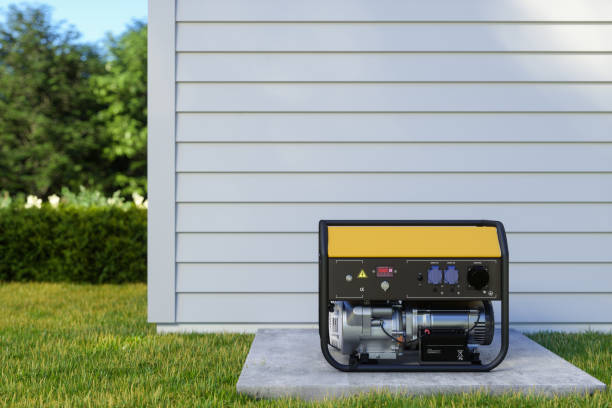
Air conditioners need two very different amounts of power, and the bigger one is what determines your generator size. Once the compressor is spinning, the AC settles into its running wattage, which is fairly modest. But at the instant it starts, the compressor pulls a surge of current, often two to three times the running load, to overcome inertia and get moving.
That surge is the whole ballgame. A generator has to supply enough peak wattage to cover the startup spike, or it will overload and shut down right when the AC calls for cooling. The way to size a generator is to first calculate the starting wattage of your AC, plus anything else you want to power at the same time.
So the math isn’t just the AC’s running draw. It’s the AC’s starting surge, added to the running wattage of the fridge, lights, and anything else on at the moment the compressor fires.
Generator Size by AC Tonnage
Here’s a general starting point by AC size. Treat these as estimates, because the exact numbers vary by unit, age, and efficiency.
| Central AC size | Approx. running watts | Approx. starting surge | Generator for AC alone |
| 2 ton (24,000 BTU) | 1,500 to 2,500 W | 5,000 to 6,000 W | 5,000 to 7,000 W |
| 3 ton (36,000 BTU) | 2,500 to 3,500 W | 6,500 to 8,500 W | 8,000 to 10,000 W |
| 4 ton (48,000 BTU) | 3,500 to 4,500 W | up to around 17,000 W | 12,000 to 17,000 W |
| 5 ton (60,000 BTU) | 4,500 to 6,000 W | 12,000 W and up | 15,000 to 20,000 W |
Those surge numbers climb fast on larger units. Micro-Air notes that a 4-ton AC can need a generator around 17,000 watts to handle its startup without help. And remember, these figures cover the AC alone. If you also want the refrigerator, lights, and a few outlets running, add their wattage on top.
How to Find Your AC’s Exact Power Needs
The most accurate numbers are printed right on your equipment, not in any general table. Look at the data plate on the outdoor condenser for figures like RLA (rated load amps), LRA (locked rotor amps), or MCA (minimum circuit ampacity). The LRA is essentially your startup surge, and it’s the value that sizes the generator.
If reading amps and converting to watts isn’t your idea of a good afternoon, that’s exactly the kind of thing a technician can do in a few minutes. A professional AC service visit can pull the exact specs off your system, confirm the compressor is drawing normal current, and tell you the real surge your generator has to cover, so you don’t oversize or undersize the purchase.
From there, list the other essentials you want during an outage and total their running watts. That combined number, AC surge plus everything else, is your target generator capacity.
The Soft-Start Trick: Run Your AC on a Smaller Generator
A soft starter can dramatically shrink the generator you need, and it’s one of the best-kept secrets in outage prep. A soft-start device limits the inrush current when the compressor starts, ramping it up gradually instead of hitting the system with one big spike.
The impact is significant. Micro-Air reports that a 4-ton AC that would normally need a 17,000-watt generator could run on a 7,100-watt generator once a soft starter is installed. That’s less than half the generator, which means a smaller, cheaper, more fuel-efficient unit and no need to buy a massive generator just to survive AC startup.
A soft starter is installed at the compressor and is a straightforward add-on for an HVAC professional. If you’re planning around outages, it’s often cheaper than upsizing the generator, and it eases the strain on the compressor every time it starts.
Portable vs Standby Generator for Running Central AC
The right type of generator depends on how automatic and how large you need backup power to be. A portable generator is the budget option and can run a smaller central AC, especially with a soft starter, but it has to be started by hand, refueled with gasoline, and connected through a proper transfer switch or interlock. It also can’t safely power a whole home at once.
A standby generator is the hands-off choice. It’s permanently installed, runs on natural gas or propane, and starts automatically within seconds of an outage, powering the AC and the rest of the home without you lifting a finger. For homeowners who want central air to keep running through a summer outage with no fuss, a standby unit sized to the home is usually the better fit, though it costs more upfront.
Both options need to be wired in correctly, which is not a place to cut corners.
Generator Safety: Carbon Monoxide and Proper Connection
Generator safety is not optional, because the two biggest risks can be deadly. The first is carbon monoxide. A portable generator produces exhaust you cannot see or smell, and it kills quickly in enclosed spaces. The Consumer Product Safety Commission is blunt about it: never operate a portable generator inside a home, garage, basement, crawlspace, or shed, and run it outside only, at least 20 feet from the house and away from doors and windows. Install battery-operated carbon monoxide alarms as a backup.
The second risk is electrical. Never plug a generator into a wall outlet to power your home, a practice called backfeeding, because it can electrocute utility workers and start fires. A generator that powers your home’s circuits, including the AC, must be connected through a transfer switch or interlock installed by a qualified electrician.
Both of these are worth getting right the first time, since the cost of a mistake is measured in lives, not dollars.
Keeping Your AC Ready for a Summer Outage
A healthy, well-maintained AC is easier and cheaper to run on a generator. A system with clean coils, a fresh filter, a correct refrigerant charge, and a strong capacitor starts more smoothly and draws closer to its rated numbers, so your generator isn’t fighting a struggling compressor that pulls extra current.
Regular AC maintenance keeps the system in that condition, which pays off in normal operation and during an outage alike. A tune-up before summer also catches a weak capacitor or dirty coil, the kinds of problems that raise startup current and can push a borderline generator over its limit.
That combination, a right-sized generator and an AC in good shape, is what actually keeps you cool when the grid goes down.
Powering Your Home Through a Canton Summer Outage
The short answer to sizing a generator for your AC is to build the number around the startup surge, not the running watts, then add whatever else you need to power. A 2-ton system might run on a 5,000 to 7,000-watt generator, while a 4-ton unit can demand far more unless you add a soft starter to cut the surge. Match that to a portable or standby generator, wire it in safely through a transfer switch, and keep the AC well maintained so it starts cleanly.
Green Energy AC Heating & Plumbing Repair is a family-owned HVAC, plumbing, and electrical company serving Canton and Norfolk County since 2008, with NATE-certified technicians, a BBB A+ rating, and 24/7 emergency service.
Because the team handles both the HVAC and electrical sides, they can pull your AC’s exact power specs, recommend a soft starter if it makes sense, and make sure a generator connection is done safely. To plan your outage backup or get your AC summer-ready, call (781) 236-3421 or get a free estimate online.
FAQ
Will a portable generator run my central air conditioner?
It can, if it’s sized, handle the AC’s startup surge rather than just its running wattage. A smaller 2-ton system may run on a 5,000 to 7,000-watt portable generator, while larger units often need more power or a soft starter to reduce the startup spike. Check your unit’s data plate, and connect the generator through a proper transfer switch.
What is the starting wattage of an AC and why does it matter?
Starting wattage, sometimes shown as locked rotor amps (LRA) on the unit, is the surge of power the compressor pulls the instant it starts, often two to three times its running wattage. It matters because your generator must supply that peak, or it will overload and shut off when the AC kicks on. Sizing to running watts alone is the most common mistake.
Can a soft starter really let me use a smaller generator?
Yes. A soft starter limits the compressor’s inrush current at startup, which can cut the required generator size roughly in half. Micro-Air reports a 4-ton AC that would need about a 17,000-watt generator could run on around 7,100 watts with a soft starter. It’s often cheaper than buying a much larger generator.
Is it safe to run a generator during a power outage?
Yes, when used correctly, but two rules are non-negotiable. Never run a portable generator indoors, in a garage, or near windows, because carbon monoxide is deadly, and keep it at least 20 feet from the home. And never backfeed power through a wall outlet. Have an electrician install a transfer switch or interlock to power your home safely.
Do you help with AC and electrical work near me in Canton and Norfolk County?
Yes, Green Energy AC Heating & Plumbing Repair serves Canton, Norwood, Sharon, Stoughton, Westwood, Dedham, Randolph, and surrounding Norfolk County communities. As an HVAC and electrical company, the team can size your AC’s power needs, install a soft starter, and support a safe generator connection. Call (781) 236-3421 or get a free estimate online.