




While checking your indoor AC unit, you notice the refrigerant line is covered in condensation, or worse, water is dripping onto the floor beneath it. It’s easy to assume there’s a leak, but that’s not always the case.
A small amount of condensation on a cold refrigerant line can be normal, especially during hot and humid Massachusetts summers. However, excessive sweating or water dripping from the line often points to another issue, such as damaged insulation, restricted airflow, or a problem with the cooling system that’s causing the line to become colder than it should.
In this guide, you’ll learn why AC lines sweat, when condensation is considered normal, what causes excessive dripping, and when it’s time to call an HVAC professional.
Key Takeaways
- AC refrigerant lines are wrapped in foam insulation so they should not sweat much.
- A sweating, dripping line usually means the foam insulation is missing or damaged.
- Heavy sweating or ice on the line points to low airflow or refrigerant problems.
- A dirty filter or coil makes the line run colder and sweat more.
- Left alone, a dripping AC line can cause mold growth and water damage.
Why Does the AC Line Sweat in the First Place?
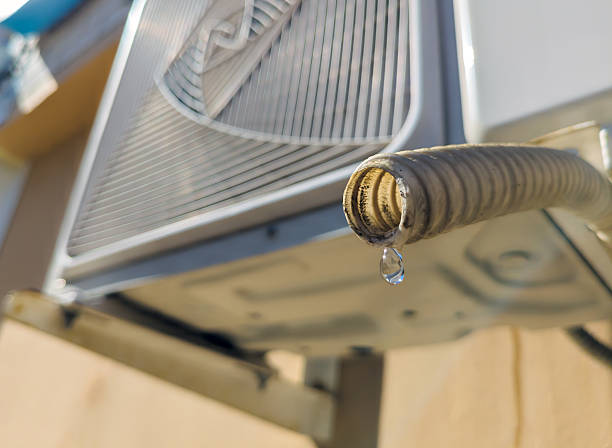
The sweating happens for the same reason a cold glass of iced tea drips on a summer day. The larger of the two copper lines running to your AC, the suction line, carries cold refrigerant back toward the outdoor unit. When that cold surface meets warm, humid indoor air, moisture in the air condenses on it and forms droplets.
That’s exactly why the suction line comes wrapped in black foam insulation. The insulation keeps warm air off the cold copper, so under normal conditions the line stays dry and doesn’t drip. A properly insulated line might feel slightly cool but shouldn’t be shedding water.
So a small amount of condensation on a humid day isn’t alarming on its own. A line that’s actively dripping or pooling water is a different story, and it usually points to one of a couple of specific causes.
The Most Common Cause: Missing or Damaged Insulation
Damaged or missing insulation is the number-one reason an AC line sweats and drips. That foam sleeve doesn’t last forever. Over the years it dries out, cracks, splits, or gets chewed by pests, and outdoor sections break down under sun and weather until bare copper is exposed.
Once a stretch of the cold line is uninsulated, warm humid air hits it directly and condensation forms fast. The water beads up, runs down the pipe, and drips wherever the low point happens to be, often onto a floor, a ceiling below an attic unit, or the equipment pad. In humid Norfolk County summers, an exposed line can produce a surprising amount of water.
The good news is that this is usually a straightforward fix. Replacing or resealing the foam insulation on the affected section stops the sweating, as long as the line itself is running at a normal temperature.
When Sweating Signals a Bigger Problem
Sometimes a sweating line means the line is running far colder than it should, and that points to an airflow or refrigerant problem rather than just bad insulation. When the suction line gets extremely cold, it sweats heavily and can eventually frost or freeze over.
Restricted airflow is the usual trigger. A dirty air filter, a dirty evaporator coil, or blocked return vents starve the coil of the warm indoor air it needs, so the coil and suction line get colder and colder. According to Trane, the top causes of a frozen AC coil are a dirty air filter, a dirty evaporator coil, blocked return vents, a faulty thermostat, and low refrigerant. Low refrigerant from a leak does the same thing by dropping the pressure and temperature in the line.
That’s why ice on the line is never just harmless condensation. If you see frost or ice, or the sweating is heavy and paired with weak cooling, AC repair in Canton, MA can find the underlying airflow or refrigerant cause and correct it before it damages the compressor.
How to Tell Normal Condensation From a Real Problem
Telling the difference comes down to how much water you see and whether there’s any ice. A light film of moisture on a cold line during a muggy stretch, with no dripping and no puddle, is generally normal condensation and nothing to worry about.
The signs that point to a real problem are more obvious. Active dripping or a puddle forming under the line, frost or ice anywhere on the copper, visibly cracked, torn, or missing foam insulation, weak or reduced cooling from the vents, and water stains or dampness on nearby surfaces all suggest something needs attention. One or two of these together is worth acting on.
In short, a barely damp, well-insulated line is fine. A dripping, icing, or bare line is telling you to look closer, because the water has to go somewhere.
The Water Damage Risk of a Dripping AC Line
A dripping AC line is worth addressing quickly because of what the water does over time. It seems minor, a few drops here and there, but a line that sweats all summer can release a steady stream of water in the wrong place.
The damage adds up. Constant moisture feeds mold and mildew on nearby framing, drywall, and insulation, and it can stain ceilings, warp flooring, and rot wood. When the sweating line runs through an attic or above a finished room, the water often shows up as a spreading ceiling stain before anyone finds the source.
Catching a sweating line early keeps a small insulation repair from turning into a mold or water-damage problem. That’s the real reason not to ignore it, even when the cooling still feels fine.
How the Problem Gets Fixed and Prevented
The fix depends on the cause, which is why an accurate diagnosis matters. If the issue is simply worn or missing insulation on a normally cold line, a technician replaces the foam sleeve and the sweating stops. If the line is running too cold and freezing, the real work is restoring proper airflow or correcting the refrigerant charge, which means cleaning the coil, replacing a clogged filter, clearing return vents, or repairing a refrigerant leak.
Prevention comes down to keeping airflow strong and catching problems early. Regular AC maintenance in Canton, MA includes filter replacement, evaporator coil cleaning, a refrigerant check, and an inspection of the line insulation, all of which head off the conditions that cause heavy sweating and freezing. Changing your filter on schedule and keeping return vents clear between visits helps the coil breathe and keeps the line at a normal temperature.
The one thing not to do is wrap a freezing line in more insulation and call it solved. That hides the symptom while an airflow or refrigerant problem keeps getting worse underneath.
If you need professional help with an AC issue, AC repair in Lexington, MA can help diagnose and fix the problem.
Keeping a Sweating AC Line From Damaging Your Canton Home
The takeaway is that a sweating, dripping AC line is almost always fixable, and figuring out which cause you have is the whole job. A well-insulated line with light condensation on a humid day is normal. A line that’s dripping, icing over, or wrapped in cracked and missing insulation is asking for attention, either a simple re-insulation or a deeper airflow or refrigerant repair. Either way, catching it early keeps the water from damaging your home.
Green Energy AC Heating & Plumbing Repair is a family-owned company serving Canton and Norfolk County since 2008, with NATE-certified technicians, a BBB A+ rating, and 24/7 emergency service. The team identifies the real reason your AC line is sweating, restores proper system performance, and prevents the more expensive repairs that come from ignored water damage.
If your AC line is dripping excessive water, freezing over, or causing dampness around the indoor unit, call (781) 236-3421 or get a free estimate online to schedule a professional inspection.
FAQ
Is it normal for my AC refrigerant line to sweat?
A light film of condensation on the cold suction line during humid weather can be normal, since the cold copper attracts moisture from warm air. What isn’t normal is active dripping, a puddle, or ice on the line. Those signs usually mean the foam insulation is damaged or the line is running too cold from an airflow or refrigerant problem.
Why is my AC line dripping water onto the floor?
The most common reason is missing or damaged insulation on the cold suction line, which lets warm humid air condense on the bare copper and drip. Heavy dripping can also come from a line that’s freezing due to a dirty filter, dirty coil, blocked vents, or low refrigerant. A technician can confirm which cause you have and fix it.
Why is there ice on my AC refrigerant line?
Ice on the line means the coil and suction line are getting too cold, usually from restricted airflow or low refrigerant. Common causes include a clogged filter, a dirty evaporator coil, blocked return vents, or a refrigerant leak. Turn the system to fan-only to let it thaw and call a professional, since running a frozen system can damage the compressor.
Can a sweating AC line cause water damage?
Yes. A line that sweats and drips all summer can release enough water to feed mold, stain ceilings, warp flooring, and rot wood framing, especially when it runs through an attic or above a finished room. That’s why a dripping or icing line is worth addressing promptly, even if your AC still seems to be cooling normally.
Do you offer AC repair and maintenance near me in Canton and Norfolk County?
Yes, Green Energy AC Heating & Plumbing Repair serves Canton, Norwood, Sharon, Stoughton, Westwood, Dedham, Randolph, and surrounding Norfolk County communities. NATE-certified technicians diagnose and fix sweating or freezing AC lines, restore airflow and refrigerant levels, and re-insulate lines as needed. Call (781) 236-3421 or get a free estimate online to schedule service.