




It’s 85 degrees and humid. Your 1970s home has no air conditioning. You could install window units in every room. You could rip open walls and run ductwork for central air. Or you could go with a mini split system you’ve been hearing about.
Each option works. Each costs a different amount. Each comes with different tradeoffs. But for an older home without ductwork, the equation isn’t “what’s cheapest?” It’s “what actually makes sense for my house, my budget, and my comfort over the next 10 to 20 years?”
For most older homes without ductwork, a mini split system ($5,000 to $15,000) is the smartest choice. It cools the whole house efficiently, requires no ductwork, and costs less to operate than window units over time. Window units work for temporary cooling or single rooms. Central air with new ductwork is the premium option if you’re renovating anyway.
This guide walks you through all three options, the real costs, the installation realities, and which one makes the most sense for different situations.
Key Takeaways
- Window units cost $300 to $1,200 per unit and are the cheapest option, but you need multiple units to cool a whole house and they use more energy than alternatives.
- Mini splits cost $5,000 to $15,000 for a whole home and are the most efficient option for older homes. They’re becoming the standard for homes without ductwork.
- Central air with new ductwork costs $15,000 to $30,000+ and provides whole-home cooling with the lowest lifetime energy costs, but installation is disruptive and most expensive upfront.
- For older homes, mini splits offer the best balance of upfront cost, energy efficiency, and comfort. Window units are a temporary solution. Central air is worth considering only if you’re doing major renovation.
- Installation complexity matters more than you think. Adding ductwork to an old house is messy and expensive. Mini splits have minimal structural disruption.
Why Older Homes Without Ductwork Need a Different Approach
Older homes present a unique cooling challenge. They weren’t built for whole-home air conditioning.
The Challenge of Adding HVAC to Old Houses
Here’s the problem: central air systems depend on ductwork to distribute cool air throughout the house. A typical central air installation requires ducts running through walls, ceilings, and crawl spaces. In a modern home built with HVAC in mind, this is planned out and relatively straightforward.
In an older home, adding ducts means:
- Opening walls to run new ducting. This requires patching, finishing, and repainting.
- Running ducts through the attic, which adds insulation work and potential moisture issues in humid climates.
- Installing vents in ceilings or walls that change the home’s appearance.
- Working around existing plumbing, electrical, and structural elements.
For a 1950s or 1970s home, the cost and disruption can be substantial. This is why older homes have historically relied on window units or, more recently, mini split systems.
The Three Main Options Explained
Your choices boil down to three systems, each with a different approach:
- Window units. Self-contained cooling for individual rooms. No installation required beyond fitting the unit in the window frame.
- Mini splits. One outdoor unit connected to multiple indoor air handlers mounted on walls. Requires small refrigerant lines run through walls or ceilings, but no ductwork.
- Central air with ductwork. A central outdoor unit with refrigerant and ducting running to every room. Requires significant installation but provides whole-home cooling from a single system.
Window Units: The Cheap, Quick Solution
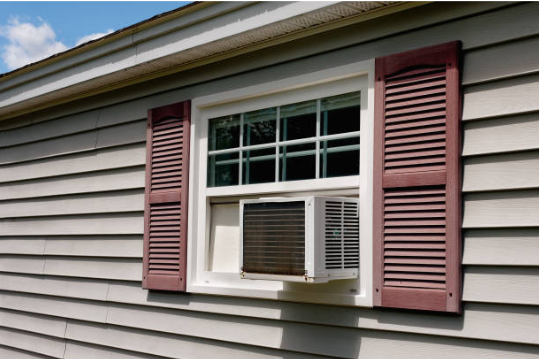
Window units are the entry-level option. Nearly everyone has seen one. If you’re looking for the fastest, least-disruptive cooling, this is it.
How Window Units Work
A window unit is a self-contained air conditioner. It sits in a window or wall opening. The outdoor side releases heat. The indoor side blows cool air into the room. Refrigerant loops between them.
You plug it in. It runs. No installation required beyond opening the window and securing the frame.
Pros of Window Units
- Cheap upfront cost. A decent window unit runs $300 to $1,200 depending on capacity and quality.
- No installation. Literally any homeowner can install it. Open window. Slide unit in. Secure with provided brackets. Done.
- Flexible. You can move them between windows or rooms. Renting? Window units don’t require landlord approval.
- Works immediately. Turn it on and cold air flows in minutes.
- No contractor needed. No HVAC company required. You buy it, install it, and do it.
Cons of Window Units
- Energy hog. Window units are less efficient than mini splits or central air. A room cooled with a window unit costs more to operate than the same room cooled by a mini split.
- Single room cooling. One unit cools one room. To cool a whole house, you need 4 to 6 units running simultaneously. That’s thousands of watts of electricity and electricity bills to match.
- Blocks windows. The unit takes up the entire window. Can’t see out. Can’t open that window for fresh air.
- Noise. Window units run louder than mini splits. Not ideal for bedrooms.
- Visually obvious. Every window in your house has a white box sticking out. Some people don’t care. Others find it unattractive.
- Seasonal hassle. In fall, you uninstall all of them. In spring, you reinstall them. That’s 6 to 10 window units twice a year.
- Maintenance. Filters need regular cleaning or replacement. Outdoor coils collect debris. One unit breaking down means one room without cooling.
- Resale impact. Buyers may see window units as a sign the home lacks “real” air conditioning. Some buyers consider it a drawback.
Window Unit Costs
A quality window unit (8,000 to 10,000 BTU, good efficiency rating) runs $500 to $1,200. To cool a 2,000 square foot home, you need roughly 4 to 6 units. Total cost: $2,000 to $7,200. Annual operating cost for 4 units running 8 hours daily during a typical cooling season: $600 to $1,200. Over 10 years: $6,000 to $12,000 in electricity alone, plus replacement of failed units.
Mini Splits: The Modern Standard for Older Homes
Mini splits have become the default choice for retrofitting older homes. Here’s why.
How Mini Splits Work
A mini split system has two main components:
- Outdoor condenser unit. Sits on the ground or mounted on the side of the house. Releases heat to the outside air.
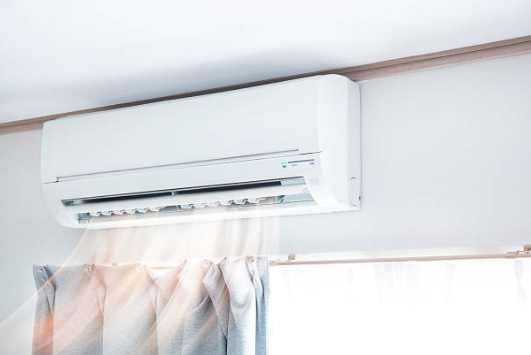
- Indoor air handlers. Small wall-mounted units inside each room or zone. Typically 1 to 4 units per system. Blow cool air into the space.
A thin refrigerant line (about 1 inch diameter) runs from the outdoor unit through a small hole in the wall to each indoor handler. That’s the only structural modification needed.
The system is controlled via remote. You set the temperature and the system maintains it.
Pros of Mini Splits
- No ductwork required. Just run refrigerant lines through walls. No massive disruption to your home’s structure.
- Zone control. Each indoor handler has its own thermostat. Cool only the rooms you’re using. Save energy in rooms you’re not in.
- Energy efficient. Mini splits are 2 to 3 times more efficient than window units. Lower operating costs over time.
- Quiet operation. Whisper-quiet compared to window units.
- Whole-home cooling. One outdoor unit serves 2 to 4 indoor handlers. Cools most or all of the house.
- Doesn’t block windows. Wall-mounted handlers don’t take up window space.
- Clean aesthetics. The indoor handlers are sleek and modern-looking. Don’t scream “temporary air conditioning.”
- Heating function. Most mini splits reverse cycle and provide heating in winter. Single system for both seasons.
- Longevity. Well-maintained mini splits last 15 to 20 years or longer.
Cons of Mini Splits
- Higher upfront cost. $5,000 to $15,000 for a whole-home system. More than window units, less than central air with ductwork.
- Installation required. You need a licensed HVAC contractor. Can’t DIY this.
- Refrigerant line routing. The contractor needs to drill holes in walls and run lines through them. Minimal structural impact but not zero.
- Visible indoor units. Wall-mounted handlers are visible on the wall. Some people like the look. Others find them intrusive.
- Maintenance. Filters need regular cleaning. Coils need occasional professional cleaning. More involved than window units.
- Multiple failure points. If the compressor fails, the whole system goes down. With window units, only one room loses cooling.
Mini Split Costs
Typical 2 to 3 zone mini split system: $6,000 to $12,000 installed. For larger homes needing 4 zones: $12,000 to $18,000. Annual operating cost: $300 to $600 for the cooling season. Over 15 years: $4,500 to $9,000 in electricity, plus maintenance.
Central Air with New Ductwork: The Complete Overhaul
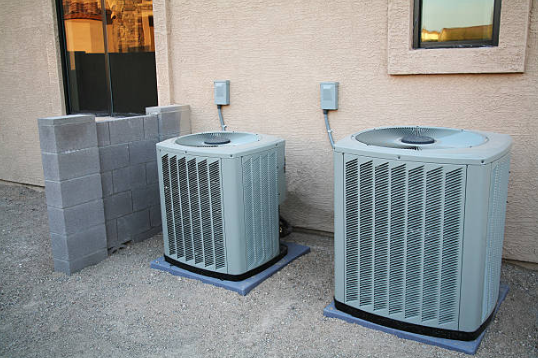
Central air is the “full installation” option. It’s what newer homes have. It’s also the most expensive retrofit for an older home.
How Central Air Systems Work
A central air system has:
- Outdoor condenser unit. Sits in your yard. Releases heat.
- Indoor evaporator coil. Installed inside your furnace or air handler, usually in the attic or basement.
- Ductwork. Runs from the central unit through walls, ceilings, and crawl spaces to deliver cool air to every room.
- Thermostat. One central control for the whole house.
Cool air is distributed through ducts to all rooms simultaneously. One system, whole-house cooling.
Pros of Central Air
- Whole-home comfort. Cools the entire house evenly. You don’t pick which rooms to cool. It’s all or nothing.
- Most efficient long-term. Central air with modern ducts and sealing is the most energy-efficient whole-home cooling option.
- Invisible system. No window units. No wall-mounted handlers. The system is hidden in the attic or basement.
- Resale value. Central air is a major selling point. Most buyers expect it in homes in warmer climates. Adds perceived value.
- Simplest operation. Set the thermostat. The system handles everything. No multiple remotes or zone management.
- Longevity. 15 to 20 years typical lifespan.
Cons of Central Air
- Highest upfront cost. $15,000 to $30,000 or more to retrofit an older home with ducts.
- Major installation disruption. Running ductwork through old homes means opening ceilings, walls, and crawl spaces. Patching and repainting is extensive.
- Attic heat loss. Ductwork in the attic loses efficiency in hot climates because the ducts themselves heat up in summer heat.
- Moisture issues. Old homes often have moisture problems. Adding ductwork can exacerbate condensation in basements or crawl spaces.
- Imperfect distribution. Rooms far from the main duct often don’t cool as fast as rooms near the unit.
- Cannot zone. You cool the whole house or nothing. No option to cool only occupied rooms.
- Noise in ducts. Air rushing through ducts can be noisier than mini split handlers.
Central Air Costs
Retrofit central air installation for a typical older home: $18,000 to $28,000. This includes the outdoor unit, indoor coil, ductwork, thermostat, and labor. Annual operating cost: $400 to $800. Over 15 years: $6,000 to $12,000 in electricity, plus maintenance.
Direct Comparison: Which Makes Sense for Your Home
All three systems are cool. The choice depends on your priorities, your home, and your budget.
If You Want Cheap and Quick: Window Units
Choose window units if:
- You need temporary cooling while you decide on a permanent system.
- You’re renting and can’t modify the structure.
- You only want to cool one or two rooms.
- You have a limited budget and can accept higher operating costs later.
Reality check: Cheap upfront, expensive over time. If you’re keeping the system for more than 5 years, you’ll likely spend more on electricity than the difference between window units and a mini split.
If You Want Efficiency and Comfort: Mini Splits
Choose mini splits if:
- You want to cool the whole house or most of it.
- You want to avoid the disruption of adding ductwork.
- You want zone control to save energy in unused rooms.
- You want a system that lasts 15 to 20 years without excessive operating costs.
- You have an older home and want minimal structural disruption.
Mini splits are the Goldilocks solution. Not the cheapest upfront, but not the most expensive. Energy-efficient. Reliable. Quiet. No major construction.
For most older homes without ductwork, mini splits are the right choice.
If You Want Premium Comfort and Resale Value: Central Air
Choose central air if:
- You’re planning to renovate the whole home anyway, so the ductwork disruption is acceptable.
- You’re selling soon and want central air as a major selling point.
- You’re in a very hot climate where efficiency matters most over decades.
- You want the “invisible” system that requires no wall-mounted units.
- You want the most even, whole-home cooling with one thermostat.
Reality check: Most expensive upfront and most disruptive to install. But if you’re staying 15+ years and value whole-home even cooling, the long-term operating costs and comfort justify it.
The Math: Total Cost of Ownership Over 15 Years
Here’s what you actually spend, not just what you see on the invoice:
System | Upfront Cost | Annual Operating | 15-Year Total | Notes |
Window Units (4 units) | $3,000 | $1,000 | $18,000 | High energy costs. Replacement of failed units. |
Mini Split (3 zones) | $9,000 | $450 | $15,750 | Moderate upfront. Low operating costs. |
Central Air with Ducts | $22,000 | $600 | $31,000 | High upfront. Lower operating cost than window units. |
The mini split wins for most homeowners. Central air catches up if you value whole-home comfort and resale value enough to justify the upfront cost and installation disruption.
Window units cost the most over 15 years, despite the lowest upfront cost.
Getting the Right System for Your Older Home
The choice depends on your home’s condition, your budget, and how long you plan to stay.
If your home needs cooling and has no ductwork, a mini split is usually the right answer. It balances cost, efficiency, and comfort. Installation is straightforward. Operating costs are low. The system is reliable and quiet.
Green Energy AC Heating & Plumbing Repair can evaluate your home and recommend whether a mini split, window units, or central air makes the most sense. We’ll explain the upfront cost, the operating costs, and what to expect from installation.
Schedule Your Cooling System Consultation and we’ll help you choose the right system for your home.
FAQ
How long does a mini split system last?
A well-maintained mini split lasts 15 to 20 years. Some systems last 20+ years. Regular filter cleaning and occasional professional maintenance extend the lifespan significantly. This is longer than window units (5 to 10 years) and comparable to central air (15 to 20 years).
Can you heat with a mini split in winter?
Yes. Most mini splits are heat pump systems that reverse cycle to provide heating in winter. You get both cooling and heating from one system. Very efficient in moderate climates. Less efficient than traditional heating in very cold climates.
Is ductwork necessary for central air?
Yes. A traditional central air system requires ductwork to distribute cool air. Without ducts, central air can’t work effectively. This is why ductwork is expensive and why mini splits are preferable for homes that weren’t built with ducts.
Do window units have to stay in all summer?
No, but it’s more convenient if they stay in. Removing and reinstalling them multiple times wears out seals and can cause leaks. Most people install them in spring and remove them in fall.
Can I convert a central heating system to include air conditioning?
Sometimes. If you have a furnace, an HVAC contractor can add an evaporator coil and ductwork to create a central air system. However, adding ducts to an older home is expensive. A mini split is usually cheaper and less disruptive.
How much does a mini split installation actually disrupt the home?
Minimal disruption. The contractor drills a small hole in the wall for refrigerant lines. Indoor handlers mount on walls. No wall opening is necessary. Patching and finishing the hole is quick. Compare this to central air, which requires opening ceilings and walls for ductwork.
Do mini splits work in very hot climates?
Yes. Mini splits work well in hot climates. They’re extremely efficient. In Arizona, Florida, and other hot regions, mini splits are increasingly popular because they cool effectively without the energy waste of window units.
Can one mini split unit cool multiple rooms?
Yes. One outdoor unit can support 2 to 4 (sometimes more) indoor handlers. You might have one outdoor unit with handlers in the bedroom, living room, kitchen, and hallway. Each zone has its own thermostat for independent temperature control.