




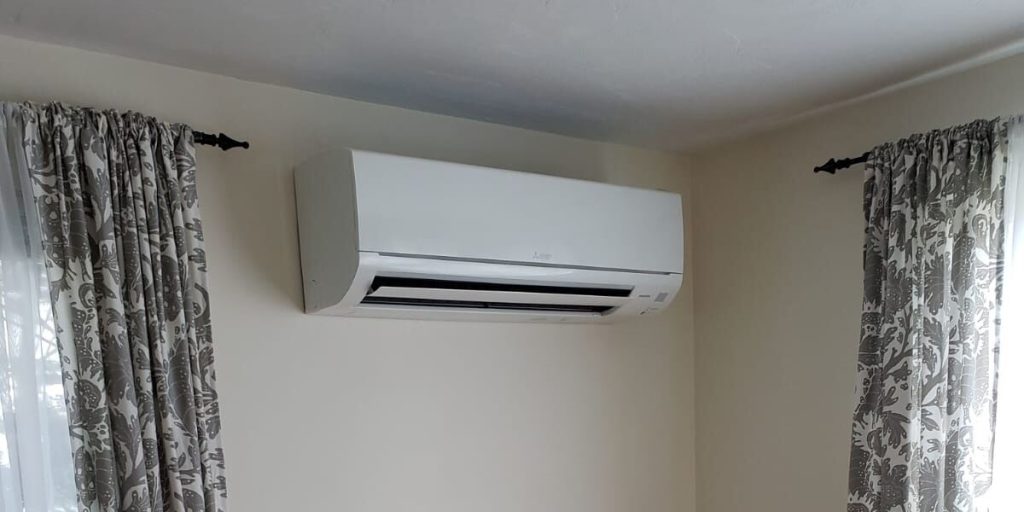
Your thermostat says 72, but the air still feels sticky and damp, the kind of clammy that makes the house feel warmer than the number suggests. So you start to wonder whether your air conditioner is actually doing anything about the moisture, or just the temperature. Here is the short version: it does both, though not always as well as it should. The EPA recommends keeping indoor humidity between 30 and 50 percent for comfort and to control mold, and a healthy AC plays a big part in getting you there.
In this blog, you’ll learn how air conditioners remove humidity, why some systems struggle to keep moisture under control, and the signs that your home may need additional humidity management beyond standard air conditioning.
Key Takeaways
- Yes, running an air conditioner lowers humidity as a natural byproduct of cooling your air.
- The evaporator coil condenses moisture out of the air and drains it outside.
- An oversized AC that short cycles cools fast but removes very little humidity.
- Setting the fan to AUTO instead of ON helps your AC dehumidify properly.
- In very humid conditions, a dedicated dehumidifier works alongside your AC.
Does Running an Air Conditioner Lower Humidity?
Yes, running an air conditioner lowers humidity. It happens as a byproduct of cooling: as your AC pulls warm, moist air across its cold evaporator coil, water condenses out of that air and drains away, leaving the air both cooler and drier. So your AC dehumidifies every time it runs, even though that is not its primary job.
The catch is that dehumidifying well depends on the system running correctly and long enough. A healthy, properly sized AC keeps humidity in a comfortable range without any help. A struggling or oversized one can leave your home cool but clammy, which is the situation most people are in when they ask this question. The sections below explain both sides.

How Your Air Conditioner Removes Humidity
The dehumidifying happens at the evaporator coil, the cold indoor coil your air blows across. When warm, humid air from your home contacts that cold surface, the moisture in it condenses into water droplets, the same way beads form on a cold glass of iced tea on a summer day. Those droplets collect on the coil, drip into a pan, and drain out of your home through the condensate line.
What that means in practice is that cooling and drying are two sides of the same process. The longer your system runs a steady cooling cycle, the more moisture it pulls from the air. That is also why a system that barely runs, or runs in short bursts, struggles to keep humidity down even when the temperature feels fine.
Why Your AC Might Not Be Lowering Humidity Enough
If your home feels cool but still damp, your AC is likely cooling without dehumidifying well. A few common issues cause that.
An Oversized System That Short Cycles
This is the most common culprit. An air conditioner that is too large for the home cools the space so fast that it shuts off before it has run long enough to remove much moisture. The temperature drops, the system stops, and the humidity stays high. These short, frequent cycles leave you with cold, clammy air and a system that wears out faster.
The Fan Set to ON Instead of AUTO
Check your thermostat fan setting. When the fan is set to ON, it runs constantly, even between cooling cycles. During those off cycles, the moisture sitting on the wet coil gets blown right back into your home before it can drain away. Switching the fan to AUTO lets that water drain off properly, which improves how well the system dehumidifies.
A Dirty Coil or Clogged Drain
A coil caked in dust cannot condense moisture efficiently, and a clogged condensate drain means the water the coil does collect has nowhere to go. Both leave more moisture in your air. Regular maintenance that cleans the coil and clears the drain keeps the dehumidifying side of your AC working the way it should.
Humidity Beyond the AC’s Capacity
On the most humid days, or in naturally damp spaces like basements, the moisture load can simply exceed what an air conditioner is built to handle on its own. The system keeps the temperature down but cannot pull humidity into a comfortable range, which is a sign you may need more than cooling alone.
When You Need More Than an AC to Control Humidity
Your air conditioner is a capable dehumidifier, but it has limits. In a very humid climate, a damp basement, or a home that stays sticky no matter how well the AC runs, a dedicated dehumidifier is the answer. It works alongside your AC, handling the moisture load directly so the air conditioner can focus on temperature.
The pattern we see most often is that a properly sized, well maintained AC handles humidity fine for most of the home, while problem areas or extreme conditions benefit from added dehumidification. A professional can measure your indoor humidity and tell you whether your AC needs attention or your home needs a dehumidifier to reach that healthy 30 to 50 percent range.
A Real Canton Humidity Story
Last summer, a homeowner on Sherman Street in Canton called Green Energy AC Heating & Plumbing Repair because their house felt damp and sticky even though the AC kept the temperature right where they wanted it.
Our technician found two issues working together. The thermostat fan was set to ON, so it kept blowing moisture off the wet coil back into the house, and the condensate drain was partly clogged, which slowed how fast the system could shed the water it collected. We switched the fan to AUTO, cleared and flushed the drain line, and cleaned the coil so it could condense moisture efficiently again. Within a day, the home felt noticeably drier and more comfortable at the same temperature.
It is a common mix up. The AC was cooling fine, but a couple of small problems were keeping it from doing the dehumidifying half of its job.
When to Call a Professional
If your home stays humid despite a running AC, that is worth a professional look rather than a guess. Cool but clammy air points to a dehumidifying problem, whether that is an oversized system, a dirty coil, a clogged drain, low refrigerant, or simply a moisture load your AC cannot handle alone. A technician measures the humidity, checks the system, and tells you what is actually going on.
Green Energy AC Heating & Plumbing Repair has been a family owned and operated HVAC company since 2008, and we are a BBB accredited business with an A+ rating. Our certified technicians handle AC repair for Canton and the surrounding area, diagnosing humidity problems and getting your system back to cooling and drying the way it should. Comfortable air is about more than the number on the thermostat.
Getting Cooler, Drier Air in Your Canton Home
So does running an air conditioner lower humidity? Yes, it pulls moisture from your air every time it cools, through the same evaporator coil that keeps you cool. The trouble starts when the system is oversized, the fan is set wrong, or the coil and drain need attention, leaving you with cool but sticky air. Staying ahead of that with regular AC maintenance keeps both sides of the job working.
If your home feels damp no matter what the thermostat reads, let a professional sort out why. Call Green Energy AC Heating & Plumbing Repair at 781-236-3421 or reach out online to get your humidity assessed and your comfort back. Cooler, drier air is usually a quick fix away.
FAQ
Does an air conditioner work as a dehumidifier?
An air conditioner dehumidifies as a byproduct of cooling, condensing moisture on its evaporator coil and draining it away. It is effective for most homes, but it is not a substitute for a dedicated dehumidifier when humidity loads are very high or in damp spaces like basements.
Why is my house humid even with the AC on?
Common reasons include an oversized system that short cycles, a fan set to ON instead of AUTO, a dirty coil, a clogged condensate drain, or low refrigerant. Any of these lets the AC cool the air without removing enough moisture, leaving the house cool but clammy.
Should I run my AC fan on auto or on to lower humidity?
Set the fan to AUTO. On the ON setting, the fan blows moisture off the wet coil back into your home between cooling cycles before it can drain. AUTO lets that water drain away, so your AC removes humidity more effectively.