




No matter how often you clean, your glassware still comes out covered in cloudy spots. White, chalky buildup keeps appearing around your faucets and showerheads, and soap never seems to rinse away as easily as it should. If this sounds familiar, you’re likely dealing with hard water.
Hard water contains high levels of minerals such as calcium and magnesium. While these minerals aren’t harmful to your health, they can leave behind stubborn deposits on fixtures, dishes, and appliances. Over time, they can also build up inside your plumbing, reduce water flow, lower appliance efficiency, and lead to costly repairs if left untreated.
In this guide, you’ll learn what causes hard water, how to recognize the signs throughout your home, the problems it can create, and the best ways to protect your plumbing and fixtures.
Key Takeaways
- Hard water spots and crusty faucets come from dissolved calcium and magnesium minerals.
- When hard water evaporates, it leaves behind chalky white limescale on every surface.
- The same scale builds up inside your pipes, water heater, and appliances too.
- Hard water is measured in grains per gallon; over 7 counts as hard.
- A whole-house water softener stops the spots, scale, and buildup at the source.
What Causes Hard Water Spots and Crusty Faucets?
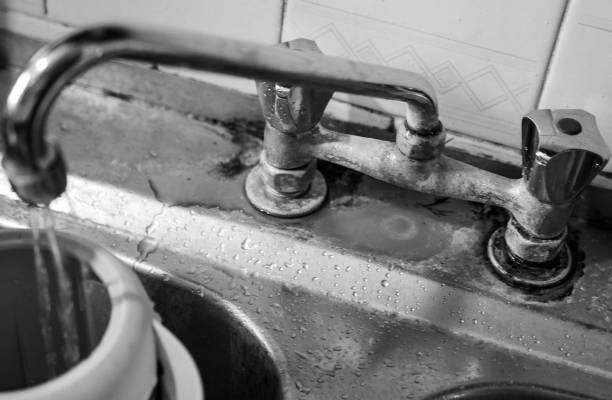
Hard water spots and crusty faucets come from dissolved minerals in your water, mainly calcium and magnesium. Water picks these minerals up as it moves through rock and soil, and the more it carries, the “harder” the water is. Those minerals are invisible while they’re dissolved, so the water looks perfectly clear coming out of the tap.
The trouble starts when that water dries. When hard water evaporates, the calcium and magnesium get left behind as a chalky white residue called limescale. Every droplet that dries on a glass, a faucet, or a shower door leaves a tiny deposit, and over time those deposits stack up into the spots and crust you’re fighting.
So the white buildup isn’t dirt and it isn’t soap. It’s a mineral deposit, which is why regular cleaners barely touch it and it always comes back. That also explains why it shows up on every fixture in the house at once.
How Hard Is Your Water?
Water hardness is measured in grains per gallon (gpg) or milligrams per liter (mg/L), and the number tells you how bad the buildup will be. Water is generally classified on a scale like this, according to standard hardness measurements:
| Classification | Milligrams per liter | Grains per gallon |
| Soft | 0 to 60 mg/L | 0 to 3.5 gpg |
| Moderately hard | 61 to 120 mg/L | 3.5 to 7 gpg |
| Hard | 121 to 180 mg/L | 7 to 10.5 gpg |
| Very hard | Over 180 mg/L | Over 10.5 gpg |
If your whole house is covered in spots and crust, your water is almost certainly in the hard or very hard range. Water hardness varies a lot across New England, especially for homes on private wells, so two houses in the same town can measure very differently. A simple water test tells you exactly where you stand, which is the first step toward fixing it.
The Damage You Can See: Faucets, Fixtures, and Glassware
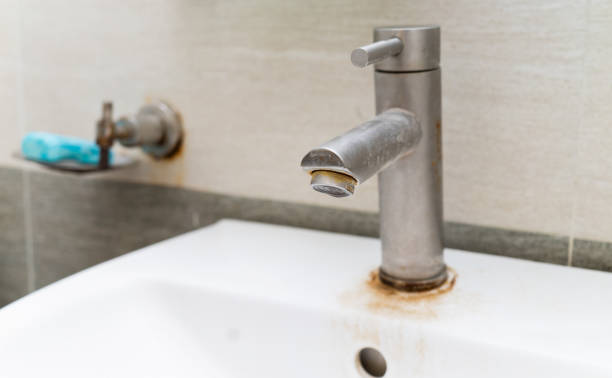
The visible damage from hard water shows up on everything water touches, and it’s more than cosmetic. Spotty dishes and cloudy glassware, a filmy residue on shower doors and tile, and that stubborn white crust on faucets and showerheads are all limescale deposits. Soap also reacts with the minerals to form soap scum, so surfaces feel filmy no matter how much you clean.
The buildup does real harm to your fixtures over time. Scale clogs the tiny holes in showerheads and faucet aerators, which is why water sputters or sprays sideways and the flow weakens. Inside the faucet, mineral deposits stiffen and wear out the moving parts, leading to drips, stiff handles, and eventually leaks.
Once the scale has damaged a fixture, cleaning won’t restore it. Professional faucet repair in Canton, MA can replace clogged aerators, worn cartridges, and scale-damaged parts to get proper flow and function back, but the deposits will return unless the water itself is treated.
The Damage You Can’t See: Pipes, Water Heater, and Appliances
The buildup you can’t see is the expensive part, because the same scale coating your faucets is forming inside your plumbing. Layer by layer, mineral scale narrows the inside of your pipes, which reduces water flow and pressure throughout the house and makes the whole system work harder.
Your water heater takes the worst of it. Heat speeds up mineral deposits, so the water heater is the epicenter of scale problems, with thick buildup forming on the heating elements and tank bottom. That scale insulates the water from the heat, driving up energy bills and shortening the heater’s life. Dishwashers, washing machines, and ice makers wear out faster for the same reason.
Because scale-related buildup can quietly reduce flow and stress fittings over years, it can contribute to pressure problems and hidden plumbing issues. If you’re seeing unexplained pressure drops or suspect scale is affecting your pipes, professional leak detection in Canton, MA can locate hidden problems before they turn into a bigger repair.
How to Stop Hard Water Spots for Good
The only lasting fix for hard water is to treat the water itself, not the fixtures. You can dissolve existing crust on a faucet or showerhead by soaking it in white vinegar, and that’s worth doing, but it’s a temporary patch. New deposits form the moment hard water hits the surface again.
To stop the problem at the source, most homeowners install a whole-house water softener. A softener uses a process called ion exchange to remove the calcium and magnesium before the water reaches your taps, so there are no minerals left to dry into spots or build into scale. The result is spot-free dishes, clean fixtures, softer laundry, and plumbing and appliances that last longer.
Sizing a softener to your home’s hardness level and water use is what makes it work well, which is why a water test and a professional recommendation matter. Treating the water is the difference between scrubbing the crust forever and solving it once.
Getting the Hard Water Buildup Out of Your Canton Home
The takeaway is that hard water spots and crusty faucets are a mineral problem, not a cleaning problem, and the white buildup you see on your fixtures is also forming inside your pipes, water heater, and appliances.
Hard water isn’t a health hazard, but it’s hard on your plumbing and your wallet, and no amount of scrubbing keeps up with it. The real fix is treating the water at the source and repairing the fixtures the scale has already damaged.
Green Energy AC Heating & Plumbing Repair is a family-owned HVAC, plumbing, and electrical company serving Canton and Norfolk County since 2008, with a BBB A+ rating and 24/7 emergency service.
The team can test your water, repair scale-damaged faucets and fixtures, check your plumbing for hidden buildup, and recommend the right treatment to stop hard water for good. To get the hard water buildup out of your home, call (781) 236-3421 or get a free estimate online.
FAQ
What causes hard water spots and crusty buildup on faucets?
Hard water contains dissolved calcium and magnesium, and when the water evaporates, those minerals get left behind as chalky white limescale. Every drop that dries on a faucet, glass, or showerhead adds to the deposit, which builds into spots and crust. It’s a mineral residue, not dirt or soap, which is why ordinary cleaners barely remove it.
Is hard water bad for my health?
Hard water is not a health hazard and is safe to drink, since calcium and magnesium are harmless in the amounts found in tap water. The problem is what it does to your home. Over time it leaves spots and scale on fixtures, builds up inside pipes and your water heater, wears out appliances faster, and dries out skin and hair.
How do I know how hard my water is?
Water hardness is measured in grains per gallon or milligrams per liter, and anything above 7 grains per gallon is considered hard. The most accurate way to find out is a water test, which is especially useful in New England, where hardness varies widely between towns and private wells. A test tells you exactly how much treatment your home needs.
Will a water softener fix hard water spots?
Yes. A whole-house water softener removes the calcium and magnesium that cause hard water through a process called ion exchange, so there are no minerals left to dry into spots or form scale. That stops new buildup on fixtures, dishes, and inside your plumbing. Sizing the softener to your water hardness is what makes it effective.
Do you repair faucets and treat hard water near me in Canton and Norfolk County?
Yes, Green Energy AC Heating & Plumbing Repair serves Canton, Norwood, Sharon, Stoughton, Westwood, Dedham, Randolph, and surrounding Norfolk County communities. The team repairs scale-damaged faucets and fixtures, checks plumbing for hidden buildup, and recommends water treatment to stop hard water at the source. Call (781) 236-3421 or get a free estimate online to schedule service.